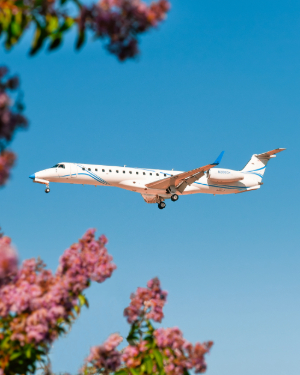
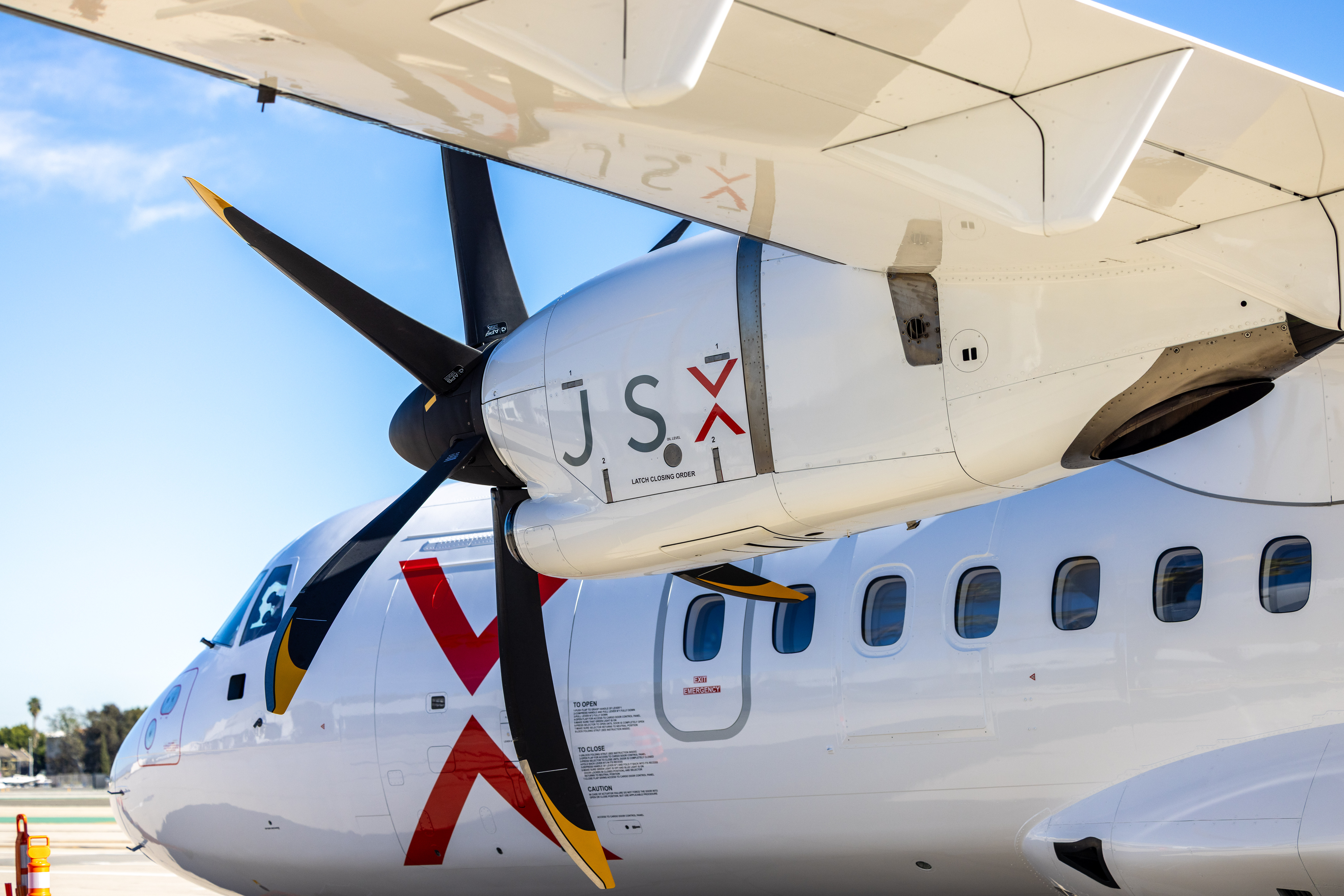
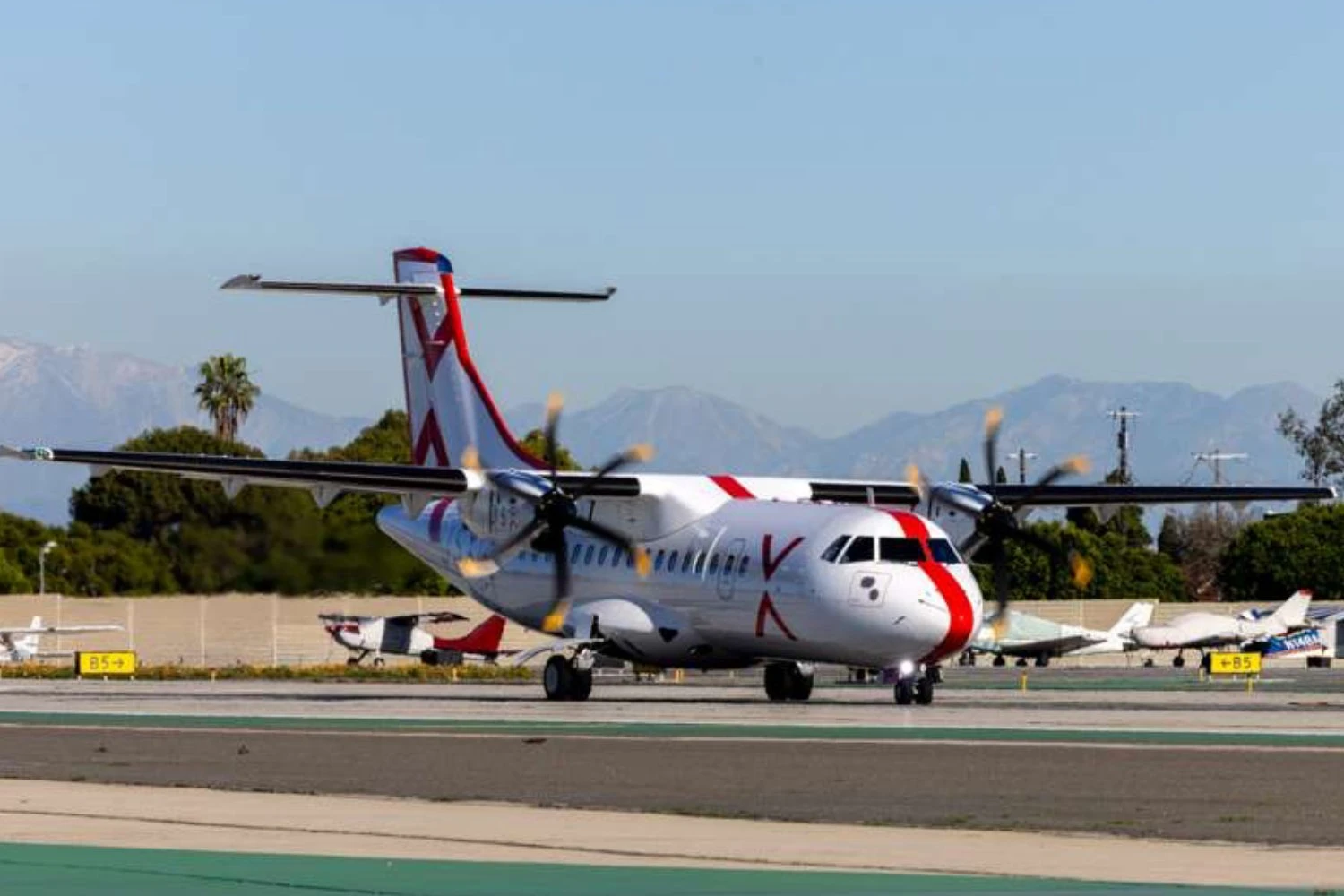
Azorra has delivered the first ATR 42-600 to JSX, the Dallas-based public charter operator, under a recently signed lease agreement. The handover marks a notable moment for the regional aviation sector, returning a modern turboprop to commercial passenger service in the United States after years of absence.
The aircraft, configured to JSX's semi-private cabin standard, represents the opening chapter of a broader fleet expansion for the carrier. For aviation enthusiasts tracking regional aviation in North America, the delivery signals renewed confidence in the ATR platform in a market long dominated by regional jets.
A Strategic Lease Agreement
Azorra, the Fort Lauderdale-based aircraft lessor specializing in regional and crossover aircraft, announced the delivery as part of a placement agreement that will see additional ATR 42-600s join the JSX fleet in the coming months. The lessor has positioned itself as a key player in the regional aircraft leasing space, with a portfolio that spans Embraer, Airbus, and ATR products.
JSX, which operates a hop-on jet service from private terminals, has built its business model around bypassing the friction of conventional commercial air travel. The addition of the ATR 42-600 broadens its operational profile, allowing the carrier to serve thinner routes and smaller airports where jet economics prove challenging.
John Evans, Azorra's Chief Commercial Officer, addressed the significance of the delivery in the company's announcement. The lessor framed the transaction as evidence of continued demand for fuel-efficient turboprops in markets where right-sized capacity matters more than outright speed.
Why the ATR 42-600 Matters
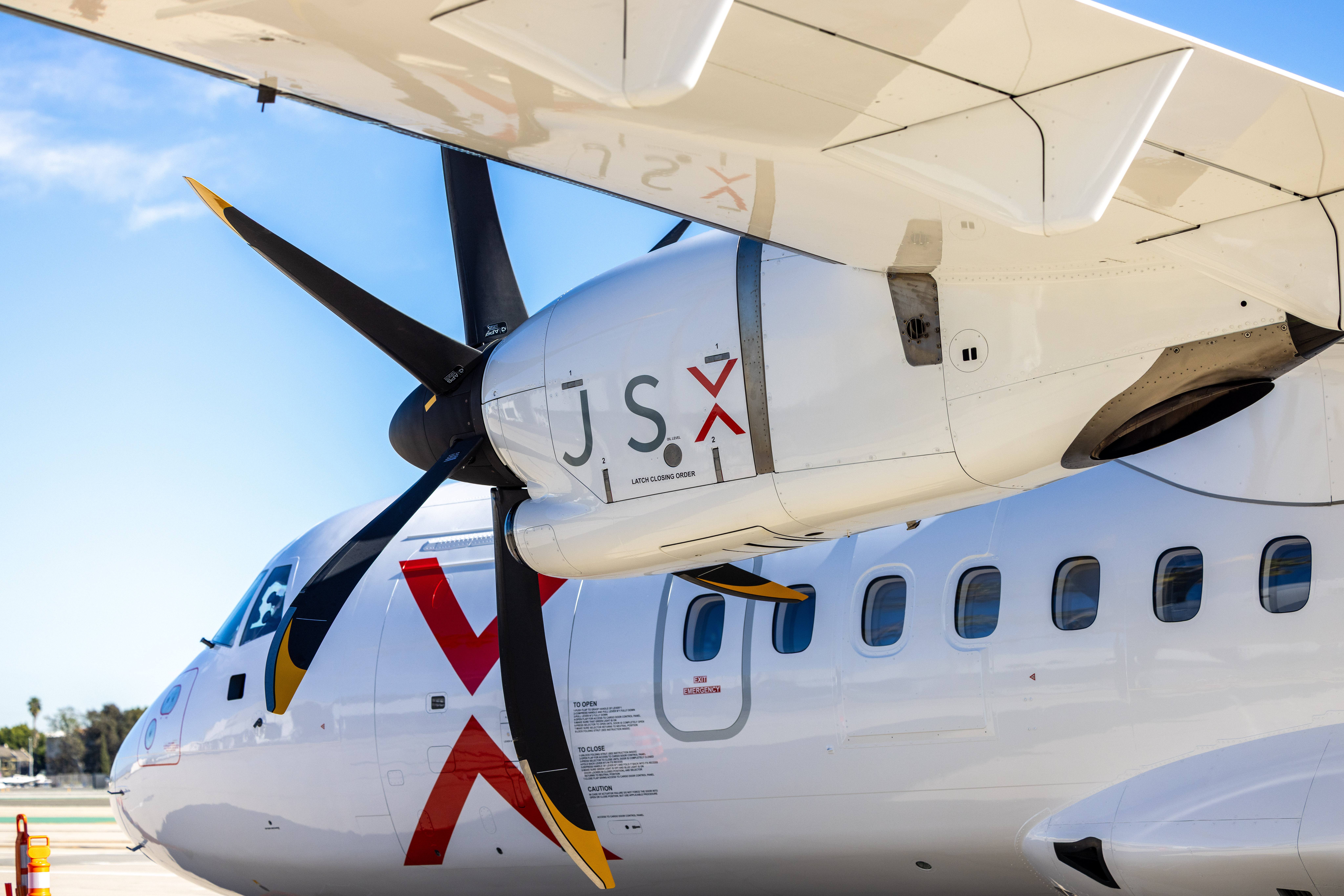
The ATR 42-600 seats up to 48 passengers in standard configuration, though JSX will operate the type with a reduced seat count to maintain its premium semi-private experience. The aircraft is powered by Pratt & Whitney Canada PW127M engines, which deliver meaningful fuel-burn advantages over comparable regional jets on short sectors.
For routes under 300 nautical miles, the ATR 42-600 burns substantially less fuel than a regional jet carrying a similar payload. That economic profile has kept the type relevant in Europe, Asia, and Latin America, even as North American operators largely retired their turboprop fleets in favor of 50-seat and 76-seat jets during the 2000s and 2010s.
The aircraft also features the updated Armonia cabin, an avionics suite built around a glass cockpit, and operational improvements that reduce maintenance costs compared with earlier ATR variants. These refinements have made the 42-600 a competitive option for operators looking to balance unit economics against passenger experience.

Analysis: How Spirit Airlines Changed Airline Pricing, then Paid the Price
JSX's Expanding Operational Footprint
JSX currently operates a fleet built primarily around the Embraer ERJ-135 and ERJ-145, configured with 30 seats to comply with the public charter regulations under which the carrier operates. The introduction of the ATR 42-600 adds a new dimension to that fleet strategy, giving JSX a platform optimized for shorter sectors where the jets' speed advantage offers little practical benefit.
The carrier has indicated that the turboprops will operate alongside its existing jet fleet rather than replace any current aircraft. This dual-fleet approach allows JSX to match equipment to route economics, deploying jets on longer city pairs and turboprops on regional connections.
JSX has built a loyal following among travelers who value the absence of long security lines, the ability to drive directly to the aircraft, and free checked baggage. Reintroducing turboprop service to that customer base represents a calculated bet that passengers will accept slightly longer block times in exchange for access to destinations conventional carriers no longer serve.
A Broader Industry Signal
The delivery carries implications beyond the two companies involved. North American carriers have largely steered clear of new turboprop orders for more than a decade, with scope clauses, passenger preferences, and fleet commonality strategies driving the shift toward regional jets. Bombardier exited the Q400 program, and ATR has historically struggled to find traction with major U.S. operators.
JSX's decision to integrate the ATR 42-600 challenges orthodoxy. By operating under public charter rules rather than as a Part 121 scheduled carrier, JSX sidesteps many of the constraints that have shaped fleet decisions at mainline regional operators. That regulatory positioning gives the carrier flexibility to pursue equipment choices based on route economics rather than pilot contract provisions.
European turboprop operators have watched the North American market closely, hoping that rising fuel prices and sustainability pressures might eventually shift the calculus in favor of more efficient propeller-driven aircraft. The JSX deal offers a data point suggesting that a shift may be underway, at least in niche segments.
Looking Ahead
Azorra has not disclosed the full schedule for subsequent deliveries, though additional ATR 42-600s are expected to enter JSX service over the coming months. The carrier will need to develop new pilot training programs, maintenance capabilities, and operational procedures to support the type, work that has been underway for some time in preparation for the fleet introduction.
For aviation enthusiasts, the arrival of factory-fresh ATR 42-600s in U.S. commercial service offers a rare opportunity to see modern turboprop operations in a market that had effectively written them off. Whether the experiment proves replicable at scale will depend on JSX's ability to translate the type's operating economics into sustainable route performance.
For now, the first aircraft sits at the start of what both companies hope will be a productive partnership, and a quiet challenge to assumptions about what kinds of aircraft belong in American skies.
Why Do Some Flights Take Longer Than Others on the Same Route? » This Startup Wants to Put a Doctor on Every Aircraft » Frontier Airlines Introduces Cancel For Any Reason Option For Passengers Up To 24 Hours Before Departure »

Comments (0)
Add Your Comment
TAGS
ROUTES Azorra JSX ATR 42-600 Turboprop Aircraft Regional Aviation Aircraft Delivery Regional Carriers Short-Haul Routes Sustainable Aviation Fuel Efficiency Aircraft Leasing Aviation Innovation Regional Connectivity Low-Cost Carrier Flights TravelRECENTLY PUBLISHED
 One-Millisecond Software Defect Identified as Cause of UK Air Traffic Control Collapse That Grounded Thousands of Flights
A new NATS report reveals a one-millisecond software defect triggered the UK air traffic control failure, causing thousands of cancellations.
NEWS
READ MORE »
One-Millisecond Software Defect Identified as Cause of UK Air Traffic Control Collapse That Grounded Thousands of Flights
A new NATS report reveals a one-millisecond software defect triggered the UK air traffic control failure, causing thousands of cancellations.
NEWS
READ MORE »
 AirAsia Pushes Back on Collapse Rumors as Fuel Costs Squeeze Budget Airline
AirAsia CEO Tony Fernandes denies the airline faces collapse, saying travel demand stays strong despite rising jet fuel prices pressuring margins.
NEWS
READ MORE »
AirAsia Pushes Back on Collapse Rumors as Fuel Costs Squeeze Budget Airline
AirAsia CEO Tony Fernandes denies the airline faces collapse, saying travel demand stays strong despite rising jet fuel prices pressuring margins.
NEWS
READ MORE »
 Delta Air Lines Moves to Claim Top Spot at LAX With New Routes and Expanded Schedule
Delta Air Lines plans its largest-ever schedule at Los Angeles International Airport, adding routes and premium seating to overtake rivals.
NEWS
READ MORE »
Delta Air Lines Moves to Claim Top Spot at LAX With New Routes and Expanded Schedule
Delta Air Lines plans its largest-ever schedule at Los Angeles International Airport, adding routes and premium seating to overtake rivals.
NEWS
READ MORE »
More than just headlines.
Get unlimited ad-free access to in-depth aviation news, premium stories, and exclusive insights other sites don't cover.
- Ad-free browsing on AeroXplorer
- Unlimited access to premium and exclusive articles
- Higher photo upload limits & commissions on sales
- Free access to Jetstream Magazine on higher tiers
- Ad-free browsing
- Sell aviation photos with 60% commission
- First week free!
- Everything in Basic+
- Unlimited premium articles
- Sell aviation photos with 70% commission
- Free Digital subscription to Jetstream Magazine
- First week free!
- Everything in Basic+ and Pro
- Sell aviaiton photos with 80% commission
- Early access to exclusive stories
- Free Digital+Print subscription to Jetstream Magazine