
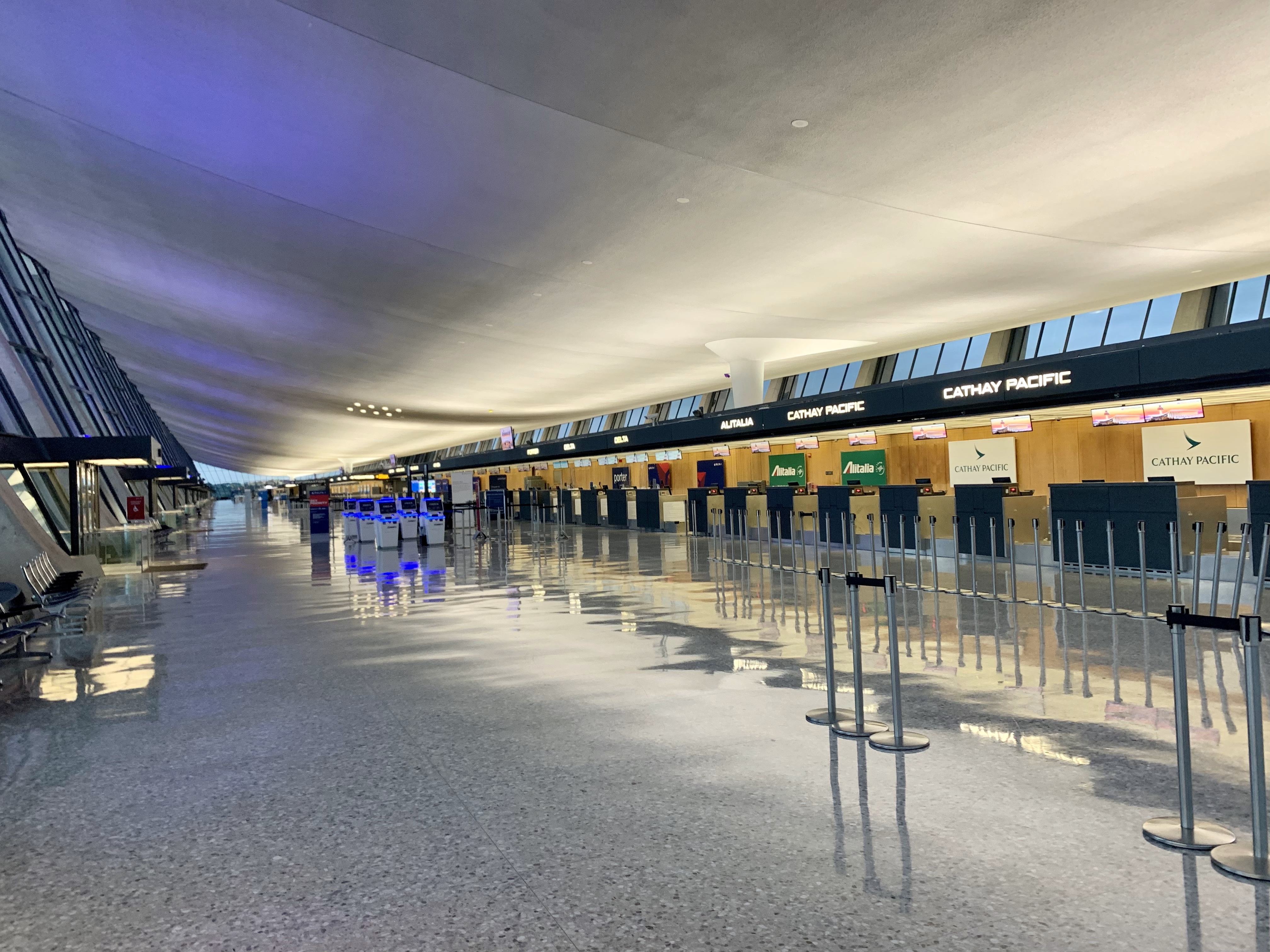

The Atlanta City Council voted unanimously on Monday, May 18, 2026, to commission a formal feasibility study into replacing federal TSA security screening at Hartsfield-Jackson Atlanta International Airport with a private contractor under the government's existing Screening Partnership Programme. The resolution, sponsored by Councilmember Byron D. Amos, passed following one of the most chaotic periods in the airport's operational history, a partial federal government shutdown that ran through February and March 2026 and left the world's busiest airport overwhelmed, understaffed, and humiliated in full public view. If the study ultimately supports a transition and the TSA approves it, Atlanta would not only become the largest airport ever to shift to private screening, but also set a precedent that every other major US hub (from LAX to JFK to O'Hare) would be forced to consider.
The Shutdown That Made This Politically Possible
Hartsfield-Jackson was nearly paralysed during the recent government shutdown, with upwards of 40% of TSA workers calling out. ICE agents were eventually called in to assist with security. The resolution states the callouts resulted in "multi-hour wait times, cancelled flights, and substantial economic harm to the travelling public and regional economy."
This move comes after travellers waited in hours-long lines at Hartsfield-Jackson due to a partial government shutdown, TSA agents calling out of work, and ICE agents being deployed into the airport in March.
The resolution acknowledged the contrast with airports that had already opted into the SPP model. The resolution, sponsored by Councilmember Byron D. Amos, noted that none of the SPP airports suffered disruption to Atlanta's degree during the shutdown.
Ha Nguyen McNeill, senior official performing the duties of the TSA administrator, confirmed the findings from a regulatory perspective:
"Expanding SPP is one of the many avenues the Trump administration looks to help protect our screening workforce from lapses in congressional appropriations." She added that "TSA employees had missed nearly $1 billion in paychecks this fiscal year."

What the Resolution Actually Does
The Atlanta City Council's Transportation Committee voted 5-0 on Monday night to advance Resolution 26-R-3429, introduced by Councilmember Byron D. Amos. It directs the airport's general manager to commission an independent feasibility study within 90 days, evaluating whether ATL should swap out federal TSA officers for private contractors under the TSA Screening Partnership Program.
Amos, who previously worked on the security team at Hartsfield-Jackson, was deliberate in framing the resolution's scope:
"(It's) just a piece of paper that says come back with a 90-day study of the feasibility. If it's good, if it's bad, what it'll cost, how would we do it if we decide to do it? At least answer some questions that we're unclear about now."
He also highlighted the practical implementation challenge: Amos has said the review would dig into cost, staffing and logistics for an operation the size of ATL, along with how any transition for workers might unfold. He told the Atlanta Journal-Constitution the goal is to "figure out how to fund this thing and where to get the people."
The Category X Problem
Roughly 20 US airports currently use private screeners under SPP, but every one of them sits below the TSA's Category X threshold. Category X is the highest-risk classification, reserved for the largest and most operationally complex airports. Hartsfield-Jackson is the only airport in the world that handles more than 100 million annual passengers, and no airport this size has tested private security, meaning ATL has no apples-to-apples comparison to look at.
There are, however, some major obstacles for the Atlanta City Council to overcome, most notably the fact that Atlanta Hartsfield is currently classed as a 'Category X' airport, which is the highest risk security category. Until now, no airport classed as Category X has transitioned to private security screening under the SPP program.
The resolution acknowledged this directly. It states that no airport of Atlanta's size has transitioned to private screening, "underscoring the need for a rigorous, data-driven feasibility analysis."
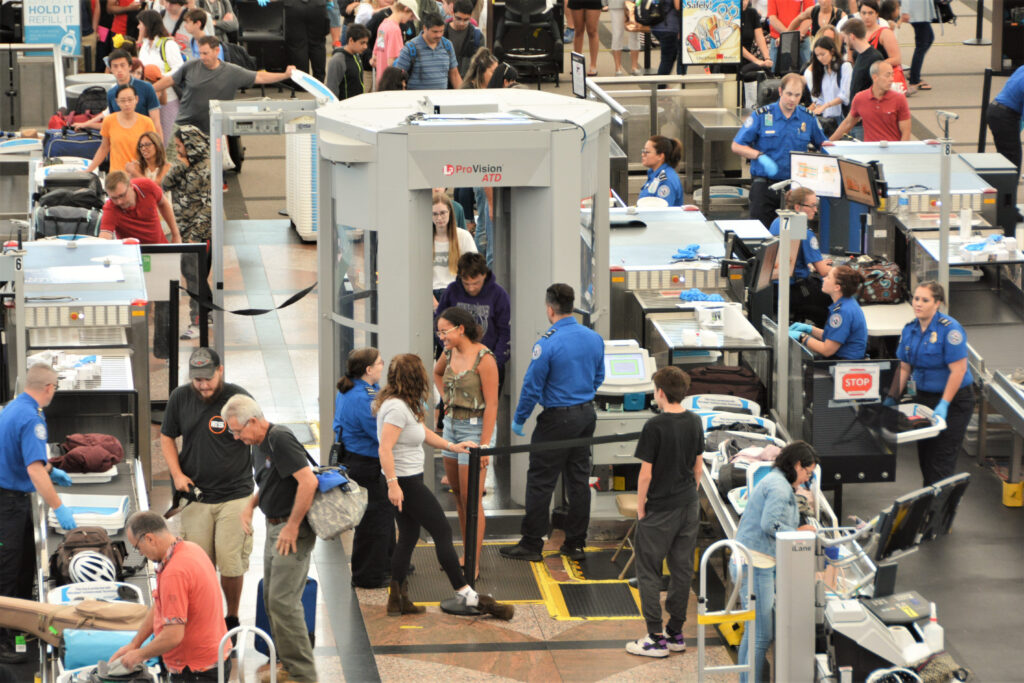
Photo: paddleyourownkanoo
The Precedent That Concerns Everyone
If ATL eventually applies and the TSA approves a private contractor, it would set the precedent for every other Category X airport: Los Angeles (LAX), New York City (JFK), Chicago O'Hare (ORD), and Dallas Fort Worth (DFW), for example, that would look to it next.
The academic case for the transition was articulated by Ramnath Chellappa, Professor of Information Systems at Emory's Goizueta Business School: "Privatisation can help. Private firms would ensure that they will get paid." He noted that private companies would not be subject to federal budget battles, addressing the root cause of the February-March crisis directly.
Research Cited by the Council
The resolution was not passed without an evidential foundation. According to research cited by the Atlanta City Council, SPP screeners have "demonstrated productivity advantages and comparable or superior security performance to federal screeners."
The Trump administration had also revealed that it was looking to shave millions of dollars from the TSA budget by expanding the SPP program to more airports.

Analysis: How Spirit Airlines Changed Airline Pricing, then Paid the Price
The Union Opposition
The worker advocacy perspective was represented clearly by George Borek, a union steward with the American Federation of Government Employees representing Atlanta-area TSA workers:
"I do not like the idea of privatising. You have a for-profit company. What does that mean? What weighs more? Is it, at the end of the day, the dollars, or is it the screening?"
Union leaders and airport workers are warning that privatising screening could create new headaches around training, liability and accountability.
Atlanta Airport's Own Position
The airport said it is not pursuing privatisation and continues to work closely with TSA to support safe, secure, and efficient screening operations. That stance leaves Atlanta in a two-track position. City lawmakers are moving to formally study the question, while airport management has maintained its existing operational posture.
What Changes, and What Does Not, Under SPP
For travellers, the practical questions are simpler. TSA PreCheck and CLEAR+ would continue to operate at SPP airports. The federal rules and standards stay the same, and only the workforce changes. What changes is staffing reliability.
Although SPP providers are still funded through the federal government rather than by the airport, the money comes from pre-existing federal contract obligations rather than direct annual appropriations.
Critically, airports that apply do not choose their private contractor. Under SPP, airports apply but don't pick their contractor. The TSA still makes the final call on who runs the checkpoint.
A favourable committee vote and a 90-day study remain a long way from a private security checkpoint in Atlanta, but the direction of travel is clear, and the question the world's busiest airport is now asking out loud has implications that reach well beyond Georgia.
KLM Brings Starlink Internet to Long-Haul Flights » United Boeing 757 Makes Overweight Landing in Dublin After Crew Reports Strong Fuel Smell and Headaches » Halon Was Supposed to Disappear. This Company Kept It Flying. »

Comments (0)
Add Your Comment
TAGS
NEWS Hartsfield-Jackson Airport TSA Privatisation Screening Partnership Programme Byron Amos Atlanta City Council Category X Airport Airport Security 2026 SPP Programme Federal Shutdown Impact TSA Atlanta ICE Airport Deployment Delta Air Lines ATL Airport Screening US Aviation SecurityRECENTLY PUBLISHED
 4th vs 5th Generation Fighter Jets: How Fighter Jets Have Evolved
A look at what separates fourth- and fifth-generation fighter jets, from stealth and sensor fusion to combat capability and cost.
INFORMATIONAL
READ MORE »
4th vs 5th Generation Fighter Jets: How Fighter Jets Have Evolved
A look at what separates fourth- and fifth-generation fighter jets, from stealth and sensor fusion to combat capability and cost.
INFORMATIONAL
READ MORE »
 United 777 Diverts to Dublin After Cockpit Windscreen Cracks Over the Atlantic
A United Airlines Boeing 777 bound for Milan made a steep descent and diverted to Dublin after its cockpit windscreen cracked mid-flight.
NEWS
READ MORE »
United 777 Diverts to Dublin After Cockpit Windscreen Cracks Over the Atlantic
A United Airlines Boeing 777 bound for Milan made a steep descent and diverted to Dublin after its cockpit windscreen cracked mid-flight.
NEWS
READ MORE »
 Boeing's Touchscreen Flight Controls for 737 Draw Sharp Criticism from Pilots
Boeing's plan to introduce Touchscreen Control Display Units on the 737 has sparked backlash from pilots who warn of safety and usability concerns.
NEWS
READ MORE »
Boeing's Touchscreen Flight Controls for 737 Draw Sharp Criticism from Pilots
Boeing's plan to introduce Touchscreen Control Display Units on the 737 has sparked backlash from pilots who warn of safety and usability concerns.
NEWS
READ MORE »
More than just headlines.
Get unlimited ad-free access to in-depth aviation news, premium stories, and exclusive insights other sites don't cover.
- Ad-free browsing on AeroXplorer
- Unlimited access to premium and exclusive articles
- Higher photo upload limits & commissions on sales
- Free access to Jetstream Magazine on higher tiers
- Ad-free browsing
- Sell aviation photos with 60% commission
- First week free!
- Everything in Basic+
- Unlimited premium articles
- Sell aviation photos with 70% commission
- Free Digital subscription to Jetstream Magazine
- First week free!
- Everything in Basic+ and Pro
- Sell aviaiton photos with 80% commission
- Early access to exclusive stories
- Free Digital+Print subscription to Jetstream Magazine