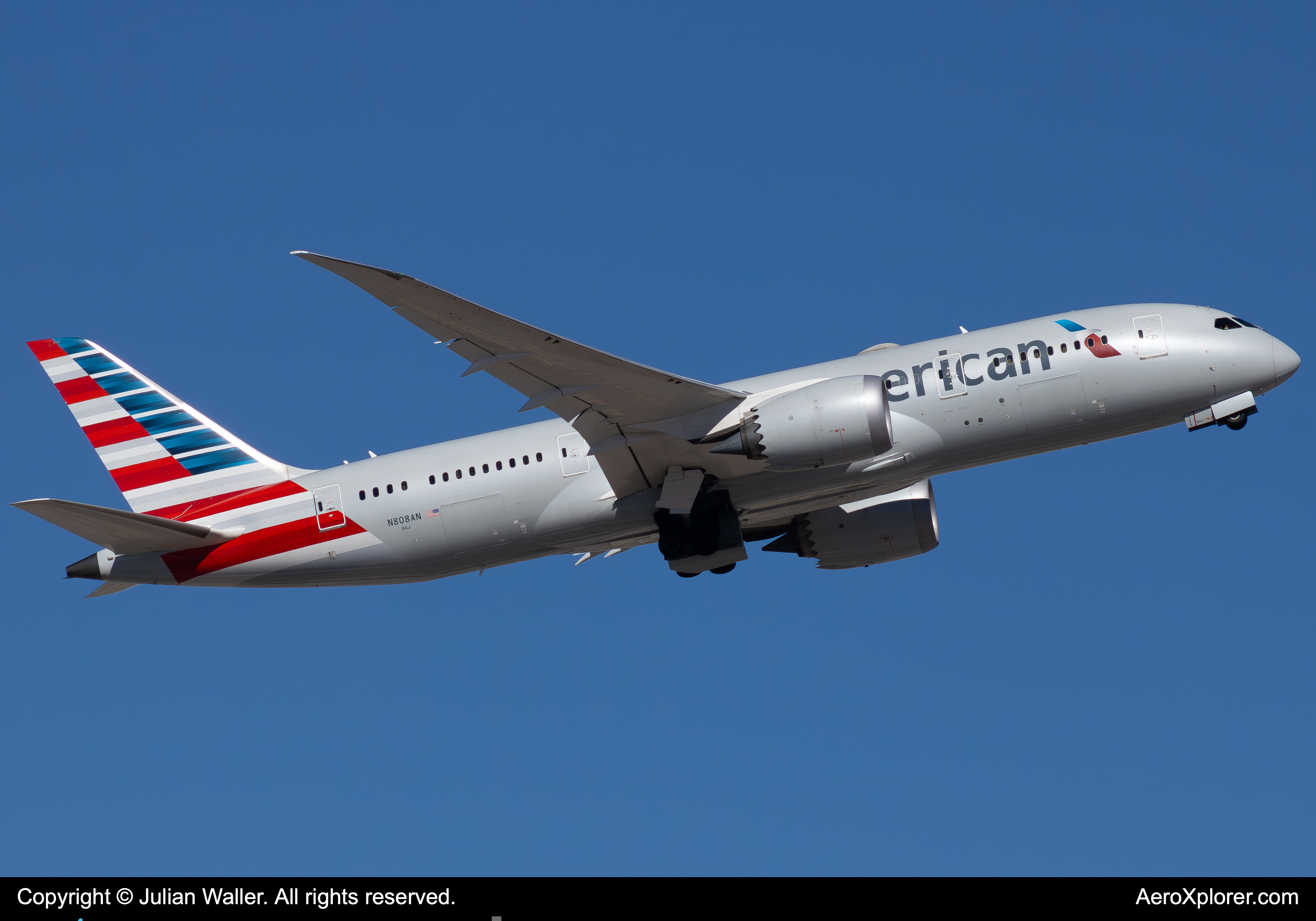

After nearly two months of operational chaos, reputational damage, crew revolts, and formal union grievances, American Airlines has finally resolved the catering meltdown that paralysed its London Heathrow operation from late February 2026. What began as a quiet internal supplier dispute snowballed into one of the most embarrassing and prolonged service breakdowns in the Fort Worth-based carrier's recent history, exposing deep vulnerabilities in the way major airlines manage third-party ground services at their most critical international hubs.
Supplier Cut, A Photo, and Silence
Since Saturday, February 28, 2026, American Airlines has not been catering flights out of Heathrow Airport, after the airline cut ties with its catering provider at the airport.
American Airlines abruptly paused its agreement with dnata in late February 2026. While the airline cited a "regular evaluation of suppliers," industry reports, and internal leaks suggest the split was triggered by hygiene concerns, specifically reports of a pest infestation at the dnata facility. Dnata, which is owned by the Emirates Group, strongly denied the allegations and maintained that its operations continued to meet food safety standards.
American Airlines remained tight-lipped on the circumstances that led to the catering meltdown, although there are reports that serious hygiene issues were identified at the contractor's kitchens. The airline refused to confirm the authenticity of a photo that appeared to show a dead rodent in an American Airlines Business Class bread basket, which was allegedly taken on a flight from London Heathrow shortly before the airline decided to suspend local catering uplift.
The airline's silence was noted critically across the industry. The meltdown couldn't come at a worse time for embattled chief executive Robert Isom, who promised only last month to "reclaim American's reputation as the world's premium global airline" amidst calls for his sacking.

The Double Catering Stopgap
With no replacement supplier secured, American Airlines was forced into a highly unusual and operationally complex workaround. Flights departing the United States had all of the catering provisions for both the outbound and return flights on board. Double catering is very unusual because aircraft galleys aren't designed to hold every bit of catering equipment and food needed for two transatlantic flights.
The practical consequences were felt immediately across every cabin. All American Airlines LHR departures were double catered from the US, with bare minimum catering, including in premium cabins. Only a protein or veg option was available. No ice cream. The understanding was that all food would be flown in from the US. For passengers paying premium business class fares on one of the most competitive transatlantic routes in aviation, it was an ignominious standard of service.
American Airlines operates up to 19 daily flights between Heathrow and nine US cities. The scale of the operation meant that thousands of passengers per day were experiencing degraded catering across every one of those services simultaneously.
British Airways to the Rescue
By mid-March, American's joint venture business partner British Airways was able to lend some spare capacity at its upmarket catering contractor Do&Co to restore a near-normal catering service in Business Class on flights departing Heathrow.
British Airways has used the Austrian catering specialist Do&Co since 2019, when it replaced its long-term supplier Gate Gourmet. The company operates a major catering facility at Heathrow that handles thousands of meals daily for British Airways flights. Integrating additional American Airlines flights into the operation required rapid adjustments because catering kitchens normally operate close to maximum capacity.
The main Premium Economy meal service on flights from London Heathrow returned to a near-normal standard by mid-March, while American Airlines expected normal Business Class catering to resume from March 11 onwards.
However, the fix was only partial. For whatever reason, American still did not have a catering contract for economy, so economy meals continued to be double catered from the United States. Meanwhile, in premium cabins, food was largely better than before. The paradox was striking: business class passengers were enjoying Do&Co's premium-quality food, the same supplier that had transformed British Airways' inflight dining, while economy passengers endured the lowest quality catering in the airline's recent history.

Crew Revolt and the APFA Grievance
The protracted nature of the disruption and the new operational burden it placed on cabin crews eventually triggered formal union action. On Monday, April 13, 2026, the New York chapter of the APFA told members it was fighting for more pay for crews working London flights, stating:
“The current conditions have materially changed how service is executed, and the added burden, particularly from double provisioning and modified service flows, has created a significantly increased and often unpredictable workload. There is no question that Flight Attendants working these flights are doing more work under more difficult conditions, without any corresponding adjustment to staffing or compensation, and that is not acceptable.”
Three days later, the stakes were raised further. On Thursday, April 16, 2026, the Dallas-Fort Worth chapter of the union informed members it had formally filed a Notice of Dispute with management, warning:
"Despite repeated engagement, the issues impacting our crews, particularly within the LHR operation, remain unresolved. As a result, we are actively advancing this dispute through the appropriate contractual channels while continuing to pursue escalation, including the filing of a Presidential Grievance if warranted."
The union was unambiguous about what it wanted. "This is not simply an operational inconvenience; it is a contractual and quality-of-work-life issue that demands resolution," the Dallas Fort Worth division of APFA told its members in an internal memo. The union demanded meaningful compensation for all affected flight attendants, application of understaffing pay where contractual thresholds had been met, and, critically, an immediate timeline for resolution.

Only Way Out: Private Aviation in a Region at War
The Human Cost Behind the Metrics
The APFA emphasised that the altered catering model was not just a logistical inconvenience, but a serious concern related to flight attendants' quality of work life. Cabin crews were managing increased responsibilities, including handling additional meal services, tighter storage constraints, and more complicated service procedures.
The APFA's national officers and base presidents had met with American Airlines management, including Jose Freig, VP of International and Inflight Dining Operations, on April 10, 2026, in what the union described as a direct engagement to address the LHR catering disruptions. That meeting produced no immediate resolution, fuelling the subsequent Notice of Dispute.
What the Resolution Means
The confirmation on April 21 that the catering crisis has now been resolved brings an end to what became an embarrassing chapter for an airline that had been explicitly promising passengers and shareholders a return to premium standards. Whether that meant repairing its relationship with dnata or exploring alternatives like Do&Co, one thing was clear: American could not afford for this situation to continue. The resolution through a full Do&Co arrangement, now covering all cabin classes, finally delivers on that reckoning.
For passengers, it means that full normal catering service has been restored across all cabins on American Airlines flights departing Heathrow. For crew members, it removes the extraordinary workload imposed by double catering. For the APFA, the resolution of the underlying operational issue does not automatically close the compensation dispute; the Notice of Dispute filed on April 16 remains a live mechanism, and the union is expected to continue pressing for retrospective recognition of the additional workload its members carried for the better part of seven weeks.
A Leadership Test at a Critical Moment
The catering crisis unfolded during a period of intense management scrutiny at American Airlines. CEO Robert Isom has faced persistent calls from investors and analysts to demonstrate improved operational execution at the carrier's most premium international hub. What began as a vendor change rapidly became a labour and operational story with network-wide implications, a cautionary tale that ending a pivotal supplier relationship without a secure backup caused more than meal shortages. It strained crews, destabilised service standards and threatened a major transatlantic schedule.
The resolution, welcome as it is, arrives with a cost, seven weeks of reduced service quality on nineteen daily London flights, a formal union grievance still working through the system, and a passenger community that will take longer to rebuild its confidence in American Airlines' ability to deliver a consistent premium product out of Heathrow than it took the airline to resolve the catering contract itself.
The $30 Billion Question: Why America's Air Traffic Control Overhaul Keeps Getting More Expensive » Boeing's Touchscreen Flight Controls for 737 Draw Sharp Criticism from Pilots » Joby Aviation to Pay $116.9 Million in Trade Secrets Case »

Comments (0)
Add Your Comment
TAGS
NEWS American Airlines London Heathrow Catering Crisis dnata Do&Co British Airways APFA Double Catering Transatlantic Flights Airline Catering Aviation Operations Inflight DiningRECENTLY PUBLISHED
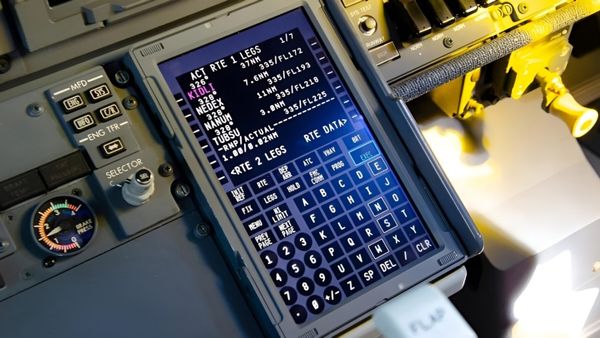 Boeing's Touchscreen Flight Controls for 737 Draw Sharp Criticism from Pilots
Boeing's plan to introduce Touchscreen Control Display Units on the 737 has sparked backlash from pilots who warn of safety and usability concerns.
NEWS
READ MORE »
Boeing's Touchscreen Flight Controls for 737 Draw Sharp Criticism from Pilots
Boeing's plan to introduce Touchscreen Control Display Units on the 737 has sparked backlash from pilots who warn of safety and usability concerns.
NEWS
READ MORE »
 Southwest Airlines Blames Brief System Outage for Boarding Delays and Checked Bag Disruptions
Southwest Airlines confirms a brief technology outage disrupted boarding and checked bag operations, forcing gate agents to process travelers manually.
NEWS
READ MORE »
Southwest Airlines Blames Brief System Outage for Boarding Delays and Checked Bag Disruptions
Southwest Airlines confirms a brief technology outage disrupted boarding and checked bag operations, forcing gate agents to process travelers manually.
NEWS
READ MORE »
 Southwest Airlines Considers Boeing 787 Order for Long-Haul International Expansion
Southwest Airlines is evaluating the Boeing 787 Dreamliner as it explores a shift into long-haul international flying, sources tell Reuters.
NEWS
READ MORE »
Southwest Airlines Considers Boeing 787 Order for Long-Haul International Expansion
Southwest Airlines is evaluating the Boeing 787 Dreamliner as it explores a shift into long-haul international flying, sources tell Reuters.
NEWS
READ MORE »
More than just headlines.
Get unlimited ad-free access to in-depth aviation news, premium stories, and exclusive insights other sites don't cover.
- Ad-free browsing on AeroXplorer
- Unlimited access to premium and exclusive articles
- Higher photo upload limits & commissions on sales
- Free access to Jetstream Magazine on higher tiers
- Ad-free browsing
- Sell aviation photos with 60% commission
- First week free!
- Everything in Basic+
- Unlimited premium articles
- Sell aviation photos with 70% commission
- Free Digital subscription to Jetstream Magazine
- First week free!
- Everything in Basic+ and Pro
- Sell aviaiton photos with 80% commission
- Early access to exclusive stories
- Free Digital+Print subscription to Jetstream Magazine